Craving that tangy, crunchy bite of a perfect banh mi? The secret isn’t just in the bread or the protein; it’s in the banh mi pickled vegetables. These vibrant, crisp veggies are the cornerstone of this iconic Vietnamese sandwich, and making them at home is surprisingly easy. As summer heats up, these pickles are a refreshing addition to not only banh mi, but also salads, bowls, and grilled meats. The combination of sweet, sour, and slightly spicy creates an addictive flavor profile that elevates any dish. Get ready to unlock the authentic taste of Vietnam with this simple yet incredibly delicious recipe.
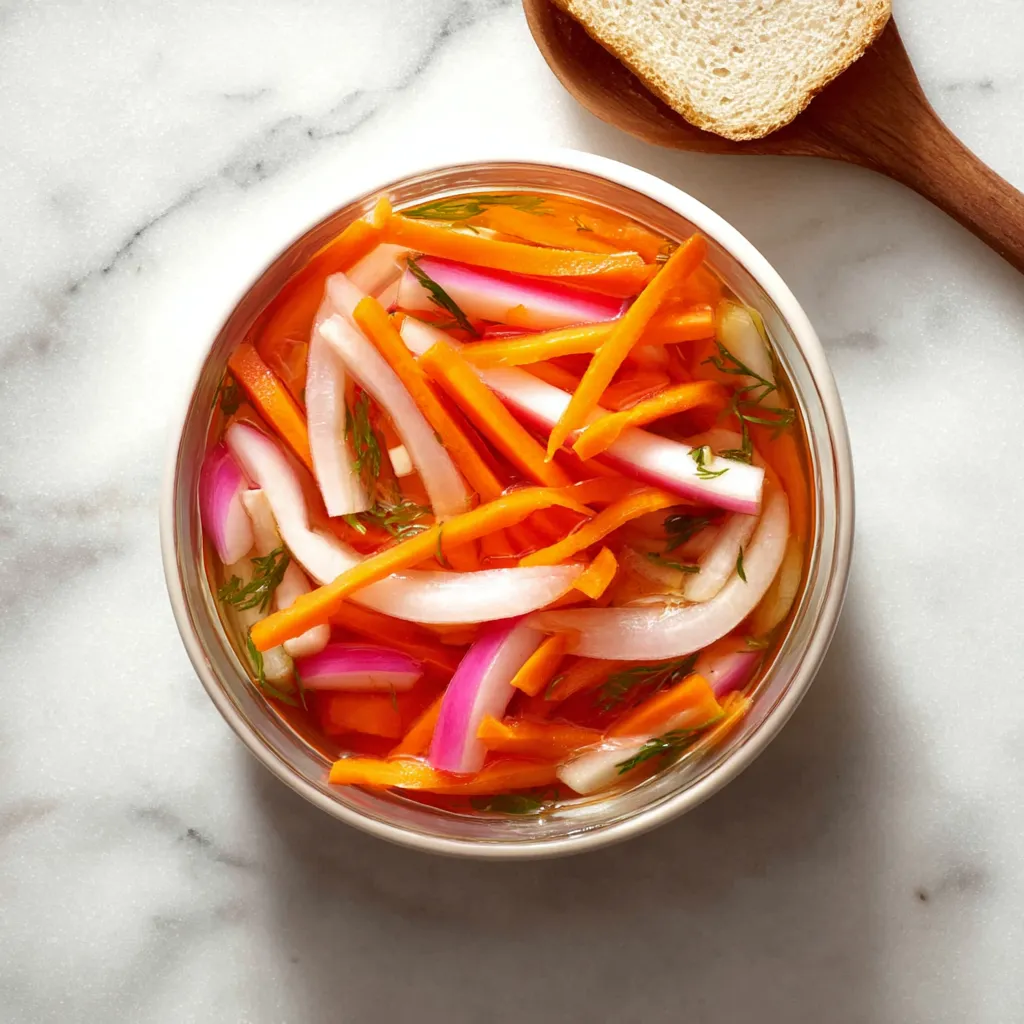
For years, I’ve been perfecting my banh mi game, starting with the foundation – the pickled vegetables. From countless batches and slight adjustments to the brine, I’ve landed on a recipe that consistently delivers that signature crunch and tangy sweetness. The method is simple and scalable, perfect for beginner picklers and seasoned pros alike. With this guide, you’ll learn the science behind the perfect pickle, including why certain ingredients work, how to adjust the sweetness and tang, and how to keep your veggies perfectly crisp.
Ingredients for the Perfect Banh Mi Pickled Vegetables
This recipe uses simple ingredients, but each plays a crucial role in achieving the perfect balance of flavor and texture. Let’s break down the ingredients:
- Daikon Radish: The star of the show! Daikon provides a mild, slightly peppery flavor and a satisfying crunch. Look for firm, heavy daikon without blemishes. It’s rich in vitamin C and dietary fiber.
- Carrots: Adds sweetness and color, complementing the daikon. Choose firm, bright orange carrots. Carrots are packed with beta-carotene, a precursor to vitamin A.
- White Vinegar: The base of the pickling brine. White vinegar provides the necessary acidity to preserve the vegetables and give them that characteristic tang. Distilled white vinegar is preferred for its clean flavor.
- Water: Dilutes the vinegar and helps create the right balance of flavors.
- Sugar: Adds sweetness and balances the acidity of the vinegar. Granulated sugar is commonly used, but you can experiment with brown sugar for a richer flavor.
- Salt: Enhances the flavors and helps to draw out moisture from the vegetables, contributing to their crispness.
- Optional: Red Pepper Flakes or Jalapeño: For a touch of heat. Adjust the amount to your preference. These introduce capsaicin, which has anti-inflammatory properties.
Ingredient Substitutions
- Rice Vinegar: Can be used in place of white vinegar for a slightly milder, sweeter flavor.
- Brown Sugar: Provides a deeper, more molasses-like sweetness than granulated sugar.
- Jicama: Can be added for extra crunch and a slightly sweet flavor.
- Ginger: A small piece of fresh ginger can be added to the brine for a warm, spicy note.
Expert Tips for the Best Pickled Vegetables
These tips are based on my years of experimenting and refining this recipe. Follow them for consistently delicious results.
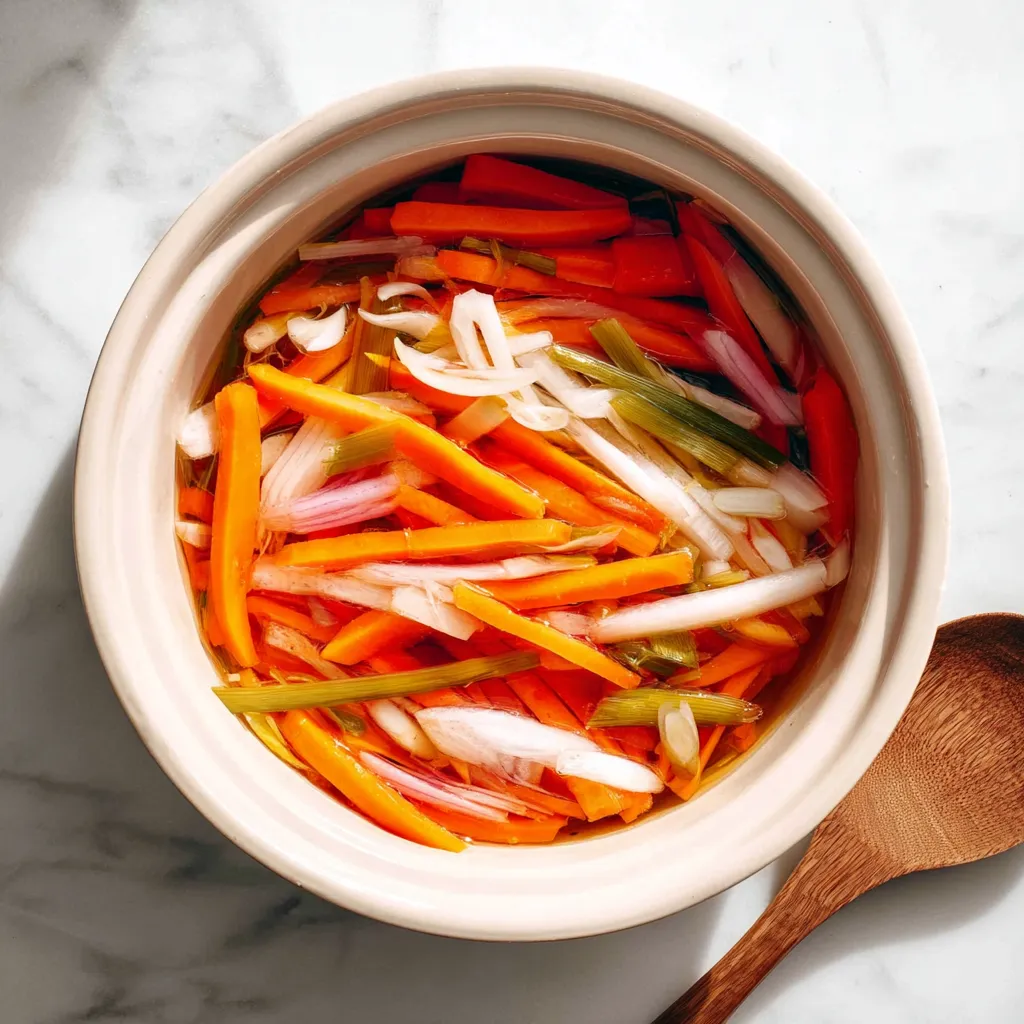
- Cut the Vegetables Uniformly: Consistency is key! Aim for matchstick-sized pieces, about 2-3 inches long and ¼ inch thick. This ensures even pickling and a pleasant texture. A mandoline slicer can be helpful for achieving uniform cuts.
- Don’t Overcook the Brine: Heat the brine until the sugar and salt dissolve, but don’t boil it. Boiling can alter the flavor and make the vegetables mushy.
- Pack Tightly, But Not Too Tightly: Pack the vegetables into the jar firmly, but leave some headspace at the top. This allows the brine to circulate properly.
- Use a Clean Jar: Sterilize your jar and lid to prevent the growth of harmful bacteria. You can do this by boiling them in water for 10 minutes.
- Taste and Adjust: After the vegetables have pickled for a few hours, taste them and adjust the brine if necessary. Add more sugar if you prefer a sweeter pickle, or more vinegar if you want it tangier.
- Patience is Key: While you can technically eat the pickles after a few hours, they’re best after at least 24 hours. This allows the flavors to fully develop and the vegetables to properly pickle.
- Experiment with Flavors: Don’t be afraid to get creative! Add other vegetables like cucumbers or radishes, or experiment with different spices like star anise or cloves.
FAQ: Your Banh Mi Pickled Vegetable Questions Answered
How long do banh mi pickled vegetables last?
When stored properly in an airtight container in the refrigerator, banh mi pickled vegetables can last for up to 2-3 weeks. Be sure to use clean utensils when removing the pickles from the jar to prevent contamination.
Can I use other types of vinegar?
While white vinegar is the most common choice, you can experiment with other types of vinegar, such as rice vinegar or apple cider vinegar. Rice vinegar will provide a milder, sweeter flavor, while apple cider vinegar will add a slightly fruity tang. Keep in mind that the flavor of the vinegar will affect the overall taste of the pickles.
How do I make the pickled vegetables spicier?
To add heat to your banh mi pickled vegetables, you can add red pepper flakes, thinly sliced jalapeño peppers, or a small amount of chili garlic sauce to the brine. Start with a small amount and taste as you go, adding more until you reach your desired level of spiciness.
Why are my pickled vegetables not crunchy?
There are a few reasons why your pickled vegetables might not be crunchy. Overcooking the brine can soften the vegetables, so be sure to only heat it until the sugar and salt dissolve. Also, packing the vegetables too tightly in the jar can prevent the brine from circulating properly, leading to uneven pickling. Finally, using old or wilted vegetables can also result in a less crunchy pickle. Choose fresh, firm vegetables for the best results.
Can I use a different sweetener instead of sugar?
Yes, you can use other sweeteners in place of granulated sugar. Honey, maple syrup, or agave nectar can all be used, but keep in mind that they will each impart a slightly different flavor to the pickles. Adjust the amount of sweetener to your preference, tasting as you go.
Can I double or triple this recipe?
Absolutely! This recipe is easily scalable. Simply double or triple the ingredients as needed, making sure to use a large enough jar or container to hold all the vegetables and brine.
Do I need to refrigerate the pickled vegetables?
Yes, it is essential to refrigerate the pickled vegetables after they have cooled down. Refrigeration helps to slow down the fermentation process and prevent the growth of harmful bacteria, ensuring that the pickles stay fresh and safe to eat for a longer period of time.
Unlock Authentic Banh Mi Flavor Today!
Mastering banh mi pickled vegetables is the key to unlocking the true flavors of this iconic Vietnamese sandwich. This simple recipe, with its perfect balance of sweet, sour, and crunchy, is a game-changer. It’s not just for banh mi, either! These pickles are fantastic in salads, bowls, or as a zesty side dish to grilled meats. Now you have the secret weapon to elevate your home cooking!
Ready to experience the difference? Try this recipe today and share your creations! Don’t forget to leave a comment below with your own tips and variations. For more delicious recipes and culinary adventures, check out my other posts on homemade banh mi, Asian-inspired salads, and quick pickling techniques. Happy pickling!
PrintBanh Mi Pickled Veggies
Crunchy Banh Mi pickled vegetables recipe Easy veggies preparation
- Prep Time: 15 minutes
- Cook Time: 5 minutes
- Total Time: 20 minutes
- Yield: 4 servings
- Category: Side Dish
- Cuisine: Vietnamese
Ingredients
- 1 large daikon radish
- 2 medium carrots
- 1 cup white vinegar
- 1 cup water
- 1/2 cup granulated sugar
- 1 tablespoon salt
- 1/2 teaspoon red pepper flakes (optional)
- 1 jalapeño pepper, thinly sliced (optional)
Instructions
- Cut the daikon radish and carrots into matchstick-sized pieces, about 2-3 inches long and ¼ inch thick.
- In a saucepan, combine the white vinegar, water, sugar, and salt. Heat over medium heat until the sugar and salt dissolve, stirring occasionally. Do not boil.
- Pack the vegetables into a clean jar or container. Add the optional red pepper flakes or jalapeño peppers, if using.
- Pour the brine over the vegetables, making sure they are fully submerged. Leave some headspace at the top.
- Let the vegetables cool to room temperature, then cover and refrigerate for at least 24 hours before serving. The pickles will be best after 24 hours.
Notes
Unlock the authentic taste of Vietnam with this simple yet incredibly delicious banh mi pickled vegetables recipe. Perfect for banh mi, salads, bowls, and grilled meats.