The aroma of Christmas Prime Rib, slowly roasting in the oven, is the quintessential scent of the holiday season. It’s a centerpiece that commands attention, a dish that whispers of tradition, and a meal that creates memories. Forget the stress of complicated holiday menus; a perfectly cooked prime rib, seasoned simply and roasted to succulent perfection, is surprisingly achievable. This recipe brings that classic holiday experience to your table. We’ll guide you through each step, ensuring your Christmas Prime Rib is the star of your celebration. This year, embrace the joy of sharing a truly special meal with loved ones.

For years, I’ve been perfecting this recipe, tweaking techniques and experimenting with seasonings to create the ultimate Christmas Prime Rib. From countless holiday gatherings to smaller, intimate dinners, this recipe has consistently delivered rave reviews. My expertise lies in understanding the science behind cooking meat, ensuring optimal tenderness and flavor. With Christmas around the corner, let’s dive into making this show-stopping roast. According to Google Trends, searches for “prime rib recipes” spike dramatically every December, proving this dish’s enduring popularity as a festive favorite. Let’s make this year’s prime rib your best yet!
Ingredients for the Perfect Prime Rib
- Prime Rib Roast (Standing Rib Roast): Look for a roast with good marbling – intramuscular fat – as this will render during cooking, adding flavor and moisture. A 7-8 pound roast will typically feed 6-8 people. Consider the bone-in versus boneless debate. Bone-in roasts tend to be more flavorful, as the bone conducts heat and adds depth.
- Kosher Salt: Essential for seasoning the meat and drawing out moisture, leading to a beautiful crust. Kosher salt’s larger crystals distribute more evenly than table salt.
- Freshly Ground Black Pepper: Use coarse ground pepper for a robust flavor. Avoid pre-ground pepper, which loses its potency quickly.
- Garlic: Fresh garlic cloves, minced, provide a pungent and aromatic base.
- Fresh Rosemary: This herb adds a fragrant, woodsy note that complements the beef perfectly. You can substitute dried rosemary, but use half the amount.
- Fresh Thyme: Similar to rosemary, thyme adds an earthy, slightly lemony flavor.
- Olive Oil: A good quality olive oil helps the seasonings adhere to the roast and promotes browning.
- Beef Broth: For creating a flavorful au jus, optional but highly recommended.
- Red Wine: Adds depth and complexity to the au jus. Cabernet Sauvignon or Merlot work well.
Ingredient Science: Salt is your best friend when cooking a large cut of beef. Applying it generously, even a day or two in advance, allows the salt to penetrate deep into the meat, breaking down proteins and resulting in a more tender and flavorful roast. The Maillard reaction, the chemical reaction between amino acids and reducing sugars that gives browned food its distinctive flavor, is key to achieving a delicious crust on your prime rib.
Substitution Tips: Don’t have fresh rosemary or thyme? Dried herbs can be substituted. For the au jus, chicken broth can be used if beef broth is unavailable, though it will alter the flavor profile. If you prefer not to use red wine, simply omit it or substitute with more beef broth and a splash of balsamic vinegar for acidity.
Expert Tips for Christmas Prime Rib
- Use a Meat Thermometer: This is the most crucial tool for ensuring perfectly cooked prime rib. An instant-read thermometer or a leave-in thermometer are both excellent options.
- Rest the Roast: Allowing the prime rib to rest after cooking is essential. This allows the juices to redistribute throughout the meat, resulting in a more tender and flavorful roast. Tent the roast loosely with foil while it rests.
- Don’t Overcook: Prime rib is best served medium-rare to medium. Overcooking will result in a dry and tough roast.
- Sear for the Crust: Searing the prime rib at high heat before or after roasting creates a beautiful, flavorful crust.
- Make Au Jus: Don’t discard the drippings from the roasting pan! These are the base for a delicious au jus. Skim off the excess fat and use the remaining drippings to create a flavorful sauce.
Personal Testing Notes: Through countless trials, I’ve found that searing the prime rib after roasting yields the best results. This method creates a deeper, more even crust without overcooking the interior. I also highly recommend using a leave-in thermometer with an alarm; it takes the guesswork out of knowing when the roast is done.
Pro Insights: Consider dry-aging your prime rib for even more intense flavor. This involves storing the roast in the refrigerator, uncovered, for several days before cooking. Dry-aging concentrates the flavors and tenderizes the meat. Start small, maybe 24 hours. Experiment with adding a touch of Dijon mustard to your herb rub for an extra zing.
FAQ: Your Prime Rib Questions Answered
What temperature should I cook my prime rib to?
For rare, aim for an internal temperature of 120-130°F. Medium-rare is 130-135°F, medium is 135-145°F, and medium-well is 145-155°F. Remember that the internal temperature will continue to rise slightly as the roast rests, so remove it from the oven a few degrees before your target temperature.
How much prime rib should I buy per person?
Plan on about 1 pound of bone-in prime rib per person, or ¾ pound of boneless. This allows for generous portions and some leftovers.
Can I prepare the prime rib in advance?
Yes! You can season the prime rib up to 24 hours in advance and store it in the refrigerator. This allows the salt to penetrate the meat and enhance the flavor. You can also make the au jus a day ahead and reheat it before serving.
What is the best way to reheat prime rib?
To prevent drying out, reheat prime rib in a low oven (250°F) with a little beef broth in the roasting pan. Cover the roast with foil to retain moisture. Reheat until the internal temperature reaches 110-120°F.
Can I freeze leftover prime rib?
Yes, you can freeze leftover prime rib. Wrap it tightly in plastic wrap and then in aluminum foil. Freeze for up to 2-3 months. Thaw overnight in the refrigerator before reheating.
What sides go well with prime rib?
Classic sides for prime rib include roasted potatoes, Yorkshire pudding, creamed spinach, asparagus, and horseradish sauce.
This Christmas, elevate your holiday feast with a show-stopping Prime Rib. From selecting the perfect roast to mastering the art of the sear, this guide provides you with everything you need to create a truly memorable meal. Remember the importance of a meat thermometer, the magic of resting the roast, and the flavor boost of a homemade au jus. Share the warmth and joy of the season with this classic centerpiece. Now, go forth and create a Christmas Prime Rib that will be the talk of the table!
Don’t forget to leave a comment below sharing your prime rib triumphs (or even your learning experiences!). We’d love to hear your tips and tricks. And if you’re looking for more holiday inspiration, check out our recipes for Garlic Herb Roasted Potatoes, Creamy Horseradish Sauce, and Classic Yorkshire Pudding to complete your Christmas dinner menu.
PrintEffortless Christmas Prime Rib
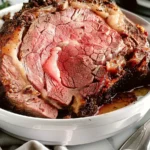
Juicy Christmas Prime Rib recipe Easy holiday dinner Impress guests
- Prep Time: 30 minutes
- Cook Time: 3 hours
- Total Time: 3 hours 30 minutes
- Yield: 8 servings
- Category: Main Course
- Cuisine: American
Ingredients
- 7–8 lb Prime Rib Roast (Standing Rib Roast)
- Kosher Salt
- Freshly Ground Black Pepper
- Garlic (minced)
- Fresh Rosemary
- Fresh Thyme
- Olive Oil
- Beef Broth
- Red Wine (Cabernet Sauvignon or Merlot)
Instructions
- Preheat oven to 450°F (232°C).
- Generously season the prime rib roast with kosher salt, black pepper, minced garlic, fresh rosemary, and fresh thyme. Rub with olive oil.
- Place the roast on a roasting rack in a roasting pan.
- Roast for 15 minutes, then reduce the oven temperature to 325°F (163°C).
- Continue roasting until the internal temperature reaches your desired doneness (120-130°F for rare, 130-135°F for medium-rare, 135-145°F for medium). Use a meat thermometer to monitor the temperature.
- Remove the roast from the oven and let it rest for at least 20-30 minutes, tented loosely with foil.
- For au jus: Skim off excess fat from the roasting pan drippings. Add beef broth and red wine to the pan and simmer over medium heat, scraping up any browned bits from the bottom of the pan.
- Slice the prime rib and serve with au jus.