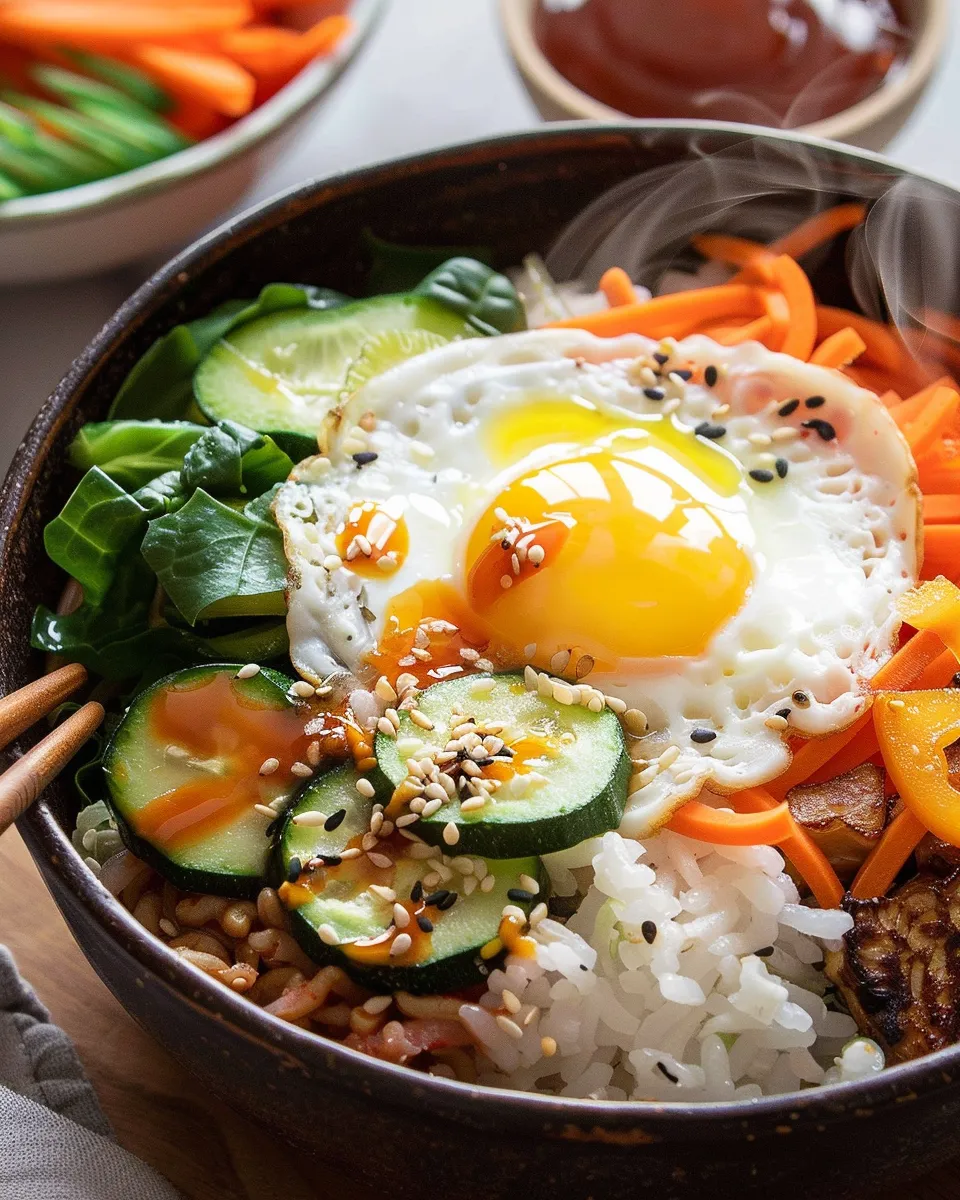
Craving a vibrant, healthy meal that explodes with flavor? Look no further than these Korean Veggie Bibimbap Bowls! Bibimbap, meaning “mixed rice,” is a Korean staple, and this veggie-packed version is perfect for a quick weeknight dinner or a stunning weekend lunch. As the weather warms up, I always find myself reaching for lighter, brighter recipes, and these bowls definitely hit the spot. The best part? They’re completely customizable to use whatever veggies you have on hand. With a fiery gochujang sauce and a perfectly cooked fried egg, each bite is a symphony of textures and tastes. Get ready to experience a flavor explosion that’s both satisfying and good for you!
My love for Korean food started years ago, with a simple kimchi jjigae recipe from my Korean friend. Since then, I’ve spent countless hours experimenting with different flavors and techniques, adapting traditional dishes to fit my vegetarian lifestyle. I’ve tested this Bibimbap recipe dozens of times, tweaking the sauce for the perfect balance of sweet, spicy, and savory. I’m excited to share all my tips and tricks with you!
INGREDIENTS
- Cooked Rice: The base of the dish. Short-grain rice, like sushi rice, is ideal because it’s sticky and holds its shape well. You can also use brown rice for a healthier twist.
- Spinach: Blanched or sautéed, provides a boost of iron and vitamins. Spinach wilts down significantly when cooked, so don’t be shy with the amount.
- Carrots: Julienned or shredded, add sweetness and crunch. Carrots are rich in beta-carotene, which the body converts into vitamin A, essential for eye health.
- Cucumber: Thinly sliced, contributes a refreshing coolness. English cucumbers are a great choice because they have fewer seeds.
- Mushrooms: Sautéed, lend an umami depth. Shiitake mushrooms are a classic choice, offering a meaty texture and rich flavor.
- Bean Sprouts: Blanched, provide a satisfying crunch. Rinse them thoroughly before blanching to remove any dirt or debris.
- Gochujang: Korean chili paste, the star of the sauce, delivering spice and depth. Gochujang gets its unique flavor from fermentation.
- Soy Sauce: Adds umami and saltiness to the sauce. Opt for low-sodium soy sauce to control the salt level.
- Sesame Oil: Provides a nutty aroma and flavor. Toasted sesame oil has a more intense flavor than regular sesame oil.
- Honey or Maple Syrup: Balances the spice with a touch of sweetness. Adjust the amount to your preference.
- Garlic: Minced, adds pungent flavor. Freshly minced garlic is always best.
- Sesame Seeds: For garnish, adding visual appeal and nutty flavor. Toasted sesame seeds have a more pronounced flavor.
- Eggs: Fried, adding richness and protein. Over-easy eggs are traditional, with a runny yolk that coats the rice and vegetables.
- Kimchi (Optional): For extra flavor and probiotics. Kimchi is a fermented cabbage dish that adds a tangy and spicy kick.
STEP-BY-STEP INSTRUCTIONS
While there are many components to Bibimbap, the process is actually quite simple! Don’t be intimidated by the ingredient list – you can prep many of the vegetables ahead of time.
- Prepare the Rice: Cook the rice according to package directions. While the rice is cooking, you can prep the other ingredients.
- Prep the Vegetables: Wash and prepare all the vegetables. Julienne or shred the carrots, thinly slice the cucumber, and blanch the spinach and bean sprouts in boiling water for a minute or two, then immediately transfer them to an ice bath to stop the cooking process. Sauté the mushrooms until tender.
- Make the Gochujang Sauce: In a small bowl, whisk together the gochujang, soy sauce, sesame oil, honey (or maple syrup), and minced garlic. Adjust the ingredients to your liking. If you want a spicier sauce, add more gochujang. For a sweeter sauce, add more honey.
- Fry the Eggs: Fry the eggs in a non-stick pan until the whites are set and the yolks are still runny.
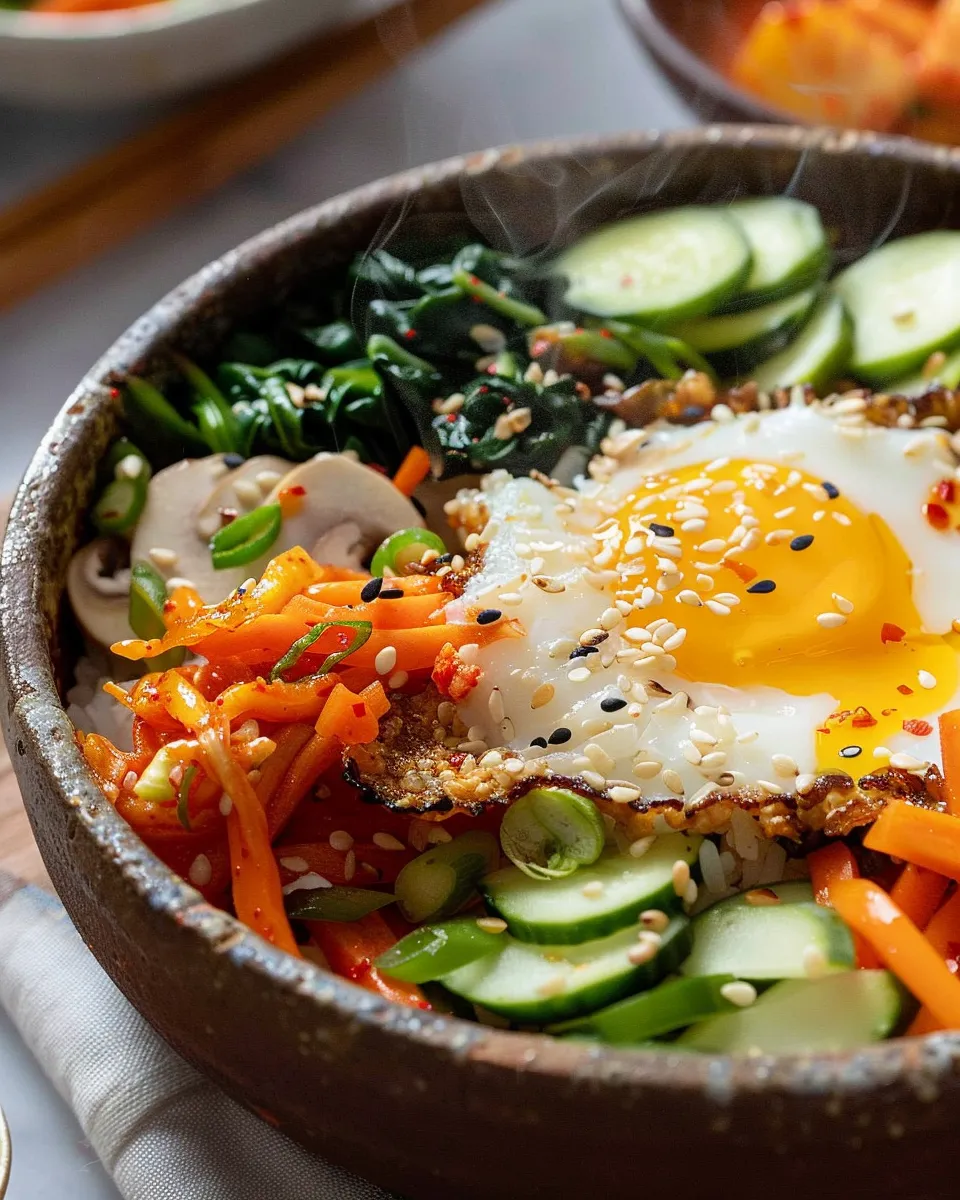
- Assemble the Bowls: Divide the cooked rice among bowls. Arrange the prepared vegetables around the rice. Top with a fried egg and drizzle generously with the gochujang sauce. Garnish with sesame seeds.
- Serve and Enjoy: Mix everything together right before eating to ensure every bite is bursting with flavor!
Alt-text: A close-up shot of the gochujang sauce being drizzled over a Bibimbap bowl, highlighting the vibrant colors and textures.
EXPERT TIPS
Having made this dish countless times, I’ve learned a few tricks to make it even better! Here are some of my favorite tips:
- Don’t Overcook the Vegetables: The vegetables should be slightly crisp-tender, not mushy. Overcooked vegetables will lose their flavor and texture.
- Taste and Adjust the Sauce: The gochujang sauce is the key to this dish. Taste it and adjust the ingredients to your liking. You can add more gochujang for a spicier sauce, more honey for a sweeter sauce, or more soy sauce for a saltier sauce.
- Use a Non-Stick Pan for the Eggs: This will prevent the eggs from sticking and make them easier to flip.
- Get Creative with the Toppings: Feel free to add other toppings to your Bibimbap bowl, such as kimchi, avocado, or tofu.
- Make it Ahead of Time: You can prep all the ingredients ahead of time and store them separately in the refrigerator. When you’re ready to eat, simply assemble the bowls and fry the eggs.
- Spice Level: Gochujang varies in spice levels. Start with a smaller amount and add more to taste.
STORAGE & SUBSTITUTIONS
Bibimbap is best enjoyed fresh, but leftovers can be stored in the refrigerator for up to 2 days. Store the rice, vegetables, and sauce separately to prevent the rice from becoming soggy. Reheat the rice and vegetables in the microwave or on the stovetop before assembling the bowls.
- Rice: Any type of cooked rice will work. Brown rice or quinoa are great healthy alternatives.
- Vegetables: Feel free to substitute any of the vegetables with your favorites. Bell peppers, zucchini, or eggplant would all be delicious additions.
- Protein: Add tofu, tempeh, or edamame for a plant-based protein boost.
- Gochujang: If you can’t find gochujang, you can substitute it with sriracha or another chili paste, but the flavor will be different.
- Honey/Maple Syrup: Agave nectar or brown sugar can be used as a substitute.
- Sesame Oil: If you don’t have sesame oil, you can use another neutral oil, but the flavor will be different.
- Vegan: Omit the fried egg or replace it with seasoned tofu. Ensure your gochujang is vegan, as some brands contain fish sauce.
FAQ
Can I make Bibimbap ahead of time?
Yes, you can definitely prep Bibimbap in advance! Cook the rice, prepare the vegetables, and make the sauce ahead of time. Store each component separately in the refrigerator. When you’re ready to eat, simply assemble the bowls and fry the eggs. This is a great way to save time on busy weeknights.
How spicy is Bibimbap?
The spiciness of Bibimbap depends on the amount of gochujang you use in the sauce. Gochujang itself varies in spice levels, so it’s always a good idea to start with a smaller amount and add more to taste. You can also adjust the sweetness of the sauce to balance the spice.
Can I use different vegetables?
Absolutely! One of the best things about Bibimbap is that it’s completely customizable. Feel free to use any vegetables you like. Some popular options include bell peppers, zucchini, eggplant, and mushrooms. Just make sure to cook them appropriately before adding them to the bowl.
What if I don’t have gochujang?
If you can’t find gochujang, you can substitute it with sriracha or another chili paste. However, keep in mind that the flavor will be different. Gochujang has a unique fermented flavor that’s hard to replicate. You might also try a blend of chili flakes, soy sauce, and a touch of sugar.
Is Bibimbap healthy?
Yes, Bibimbap can be a very healthy meal! It’s packed with vegetables, which are a great source of vitamins, minerals, and fiber. It also contains protein from the egg and can be made with brown rice for added fiber. Just be mindful of the amount of sauce you use, as it can be high in sodium.
Can I make Bibimbap vegan?
Yes, it’s easy to make Bibimbap vegan! Simply omit the fried egg or replace it with seasoned tofu. Also, make sure that your gochujang is vegan, as some brands contain fish sauce. You can find vegan gochujang at many Asian grocery stores or online.
How do I store leftover Bibimbap?
Store leftover Bibimbap in the refrigerator for up to 2 days. It’s best to store the rice, vegetables, and sauce separately to prevent the rice from becoming soggy. Reheat the rice and vegetables in the microwave or on the stovetop before assembling the bowls.
Alt-text: A person enjoying a Korean Veggie Bibimbap bowl with a spoon, showcasing the vibrant colors and textures.
These Korean Veggie Bibimbap Bowls are a delicious and healthy way to enjoy a classic Korean dish. With a rainbow of vegetables, a flavorful gochujang sauce, and a perfectly cooked fried egg, each bite is a burst of flavor and texture. Don’t be afraid to get creative with the ingredients and customize the bowls to your liking. Now it’s time to gather your ingredients, put on some music, and enjoy the process of creating these flavorful bowls. Don’t forget to share your creations with me on social media and tag me! I can’t wait to see your Bibimbap masterpieces!
PrintKorean Veggie Bibimbap Bowls
Veggie bibimbap bowls recipe Easy Korean bowls Delicious bibimbap
- Prep Time: 20 minutes
- Cook Time: 20 minutes
- Total Time: 40 minutes
- Yield: 4 servings
- Category: Main Course
- Cuisine: Korean
Ingredients
- 4 cups Cooked Rice
- 2 cups Spinach
- 1 cup Carrots, julienned or shredded
- 1 cup Cucumber, thinly sliced
- 1 cup Mushrooms, sautéed
- 1 cup Bean Sprouts, blanched
- 3 tablespoons Gochujang
- 2 tablespoons Soy Sauce
- 1 tablespoon Sesame Oil
- 1 tablespoon Honey or Maple Syrup
- 2 cloves Garlic, minced
- 2 tablespoons Sesame Seeds
- 4 Eggs
- 1/2 cup Kimchi (Optional)
Instructions
- Prepare the Rice: Cook the rice according to package directions. While the rice is cooking, you can prep the other ingredients.
- Prep the Vegetables: Wash and prepare all the vegetables. Julienne or shred the carrots, thinly slice the cucumber, and blanch the spinach and bean sprouts in boiling water for a minute or two, then immediately transfer them to an ice bath to stop the cooking process. Sauté the mushrooms until tender.
- Make the Gochujang Sauce: In a small bowl, whisk together the gochujang, soy sauce, sesame oil, honey (or maple syrup), and minced garlic. Adjust the ingredients to your liking. If you want a spicier sauce, add more gochujang. For a sweeter sauce, add more honey.
- Fry the Eggs: Fry the eggs in a non-stick pan until the whites are set and the yolks are still runny.
- Assemble the Bowls: Divide the cooked rice among bowls. Arrange the prepared vegetables around the rice. Top with a fried egg and drizzle generously with the gochujang sauce. Garnish with sesame seeds.
- Serve and Enjoy: Mix everything together right before eating to ensure every bite is bursting with flavor!
Notes
Craving a vibrant, healthy meal that explodes with flavor? Look no further than these Korean Veggie Bibimbap Bowls! Bibimbap, meaning “mixed rice,” is a Korean staple, and this veggie-packed version is perfect for a quick weeknight dinner or a stunning weekend lunch. Completely customizable to use whatever veggies you have on hand. With a fiery gochujang sauce and a perfectly cooked fried egg, each bite is a symphony of textures and tastes.